

Two pages can give different RTP figures for a slot with the same JILI name. Do not pick the higher figure and assume it belongs to the game you opened. Check the current game information, identify the title and version where shown, and keep the source beside the number. If the information cannot be matched, the RTP remains unverified for that game.
Take the number out of the ranking and put it in a record
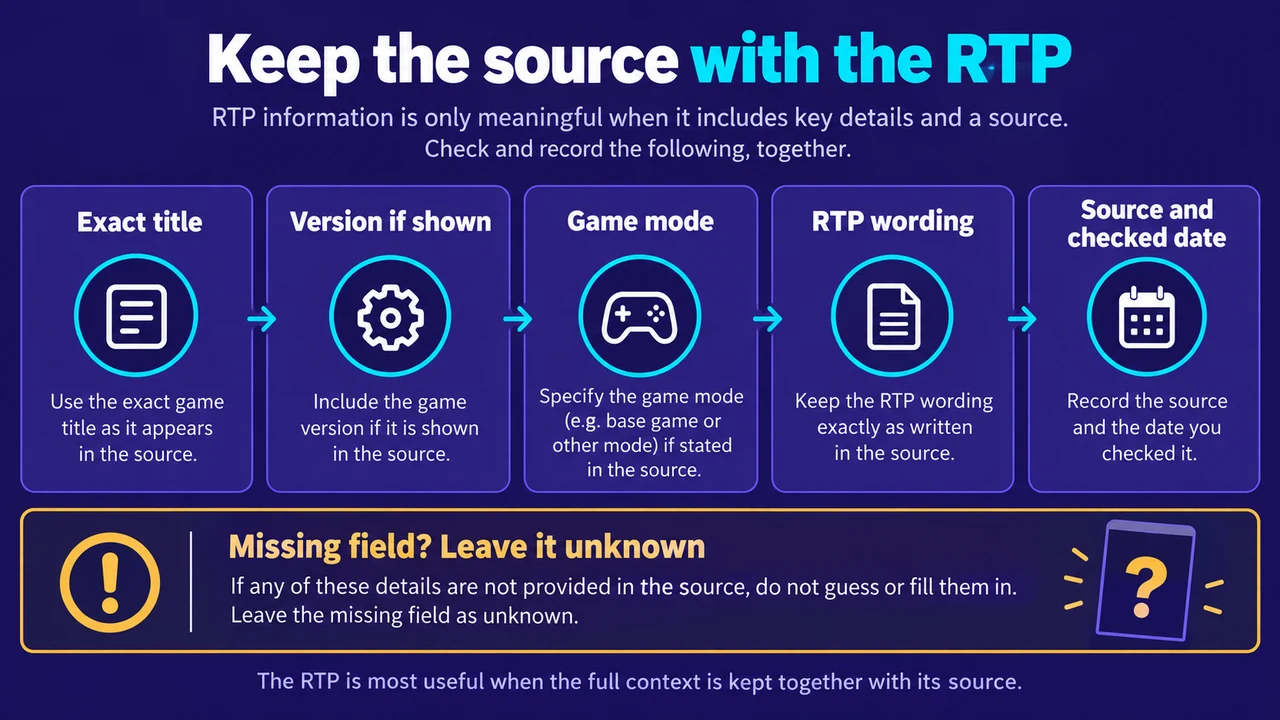
An RTP comparison is useful only when you know what is being compared. A search snippet may omit a game variant, a separate mode or the date of its source. A guide can also repeat an old number without showing how it was obtained. Repeating the same percentage across several websites is not independent verification.
Open the information or help menu for the exact title. If you can read the rules without placing a wager, do that first. Record the wording rather than converting it into a number from memory. A familiar logo, matching artwork or a similar title is not enough to fill a missing version field.
| Field | Record | If missing |
|---|---|---|
| Game identity | Exact title, provider and game ID if shown | Do not substitute a similar sequel. |
| Build or version | Identifier shown by the game or confirmed source | Write “not shown.” |
| Rules and mode | Base mode or named paid feature mode | Do not mix separate figures. |
| RTP statement | Number and wording from the source | Write “not verified,” not an estimate. |
| Source and date | Where it appeared and when checked | Do not treat an undated table as current. |
For a broader reading order, use the slot rules-page guide. Here the narrower task is source matching: you want a defensible answer to “which figure applies to this title and mode?” rather than a list of games that allegedly return more money.
When the figures disagree
Keep both statements and their source details. Check whether one refers to another title, region, build or feature mode. Those are possibilities to investigate, not explanations to assume. This review did not obtain the actual deployed JILI build’s RTP on Vegas11, so it does not assign a current value to Super Ace, Fortune Gems or Bubble Beauty.
Ask verified operator support a specific question: “Which RTP statement applies to this exact game and mode, and where can I read the applicable rules?” Include a cropped rule screenshot if needed, with private account details removed. A reply that names a version and links to its rules is more useful than a reply saying the game is popular or pays well.
A public regulatory list may establish a different fact. PAGCOR’s JILI list dated 20 November 2025 identifies titles and game versions in its stated context, but does not supply a Vegas11 RTP figure or prove a match to the game you are reading. Do not turn approval-list presence into a percentage or a claim of local eligibility.
Three percentages that should not be mixed
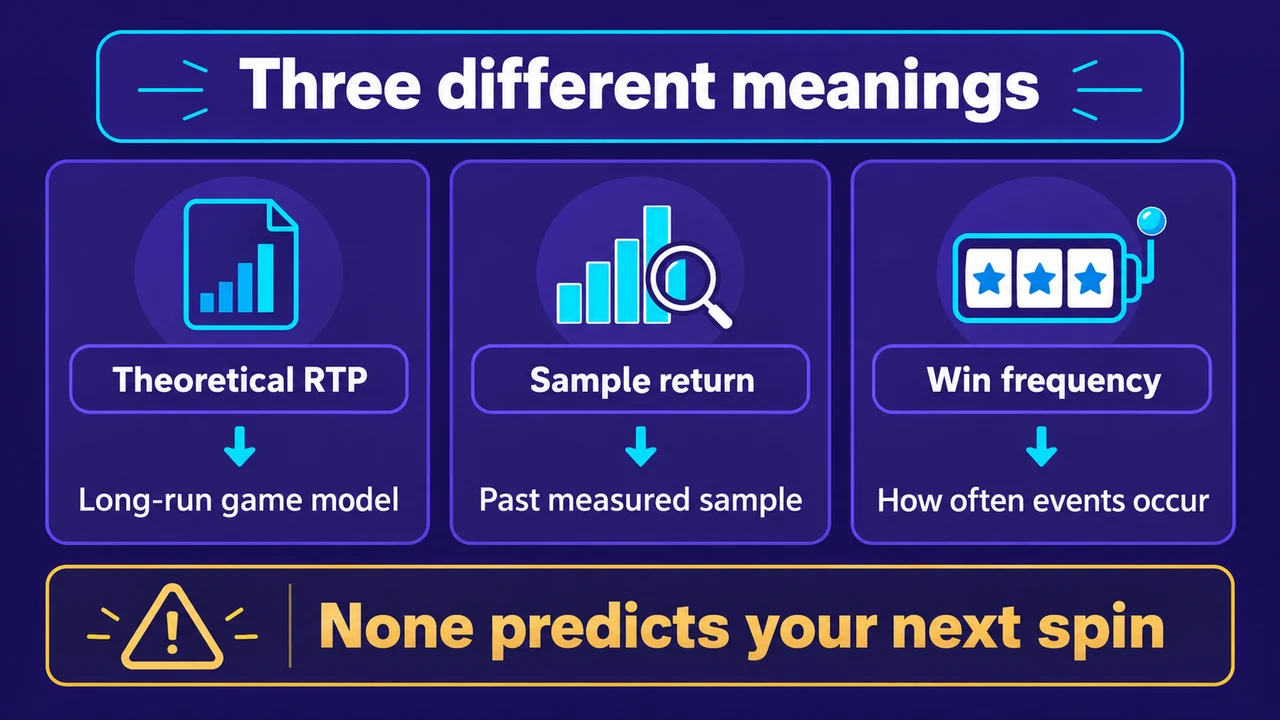
Theoretical RTP describes a game’s mathematical return relative to total stakes over its long-run model. It is not the percentage of spins that win, the amount of your deposit protected from loss, or a withdrawal-success rate. A high value still does not tell you what will happen within the money or time you set aside.
A measured return is different: divide the total returned by the total staked in a defined sample. That result describes the sample and needs its size, collection method and period. A “live RTP” meter with none of those details cannot be assessed properly, and even a properly described sample is not a forecast for your next spin.
Volatility asks another question about the distribution of outcomes; it is not a correction to apply to the RTP. Our RTP and volatility comparison explains that distinction. The RTP and house-edge guide addresses the related long-run mathematical terms without turning them into a session promise.
A checked number does not create a reason to play longer
Imagine a hypothetical game with 96% theoretical RTP. That does not promise ₹96 back from your next ₹100 of stakes. There is no session-level debt the game must repay to you, and no fixed number of spins after which your personal return must reach the stated figure. This example explains the term; it is not an RTP claim for a JILI title.
The UK Gambling Commission’s game-information standard includes ways to disclose winning likelihood within its scope. We use it as a public reference for reading rules, not as evidence of Vegas11 licensing or of any number on this site. The controlling information for a participation decision must still be the current applicable rules and your local eligibility.
If a missing or contradictory figure is central to your decision, pause that decision. Do not use more paid spins as a way to measure it yourself, and do not extend a session to “reach the RTP.” Knowing the source improves your understanding; it does not remove the possibility of losing all money staked.
Source and update note
Updated October 2, 2026. Vegas11 editorial source-comparison guidance based on the public references linked above. Unverified game-specific percentages and the earlier suggestion to play longer have been removed. No authenticated game-info capture, deployed-version test or current RTP ranking is claimed. Intended for adults legally eligible where they are.
This update was prepared with AI assistance and reviewed separately for clarity and source limits. It does not include a firsthand test of the platform.
Check Vegas11 Details
Review the official sign-in page and current terms, and keep every session within your personal budget and time limits.