

Quick answer: RTP describes a theoretical long-run return percentage, while house edge describes the operator’s theoretical advantage under a game’s rules. They are related ways of discussing game math, but neither predicts the outcome of one spin, hand or short session.
By Vegas11 Editorial Team – Updated 2026-09-10 – For adults of legal gambling age only.
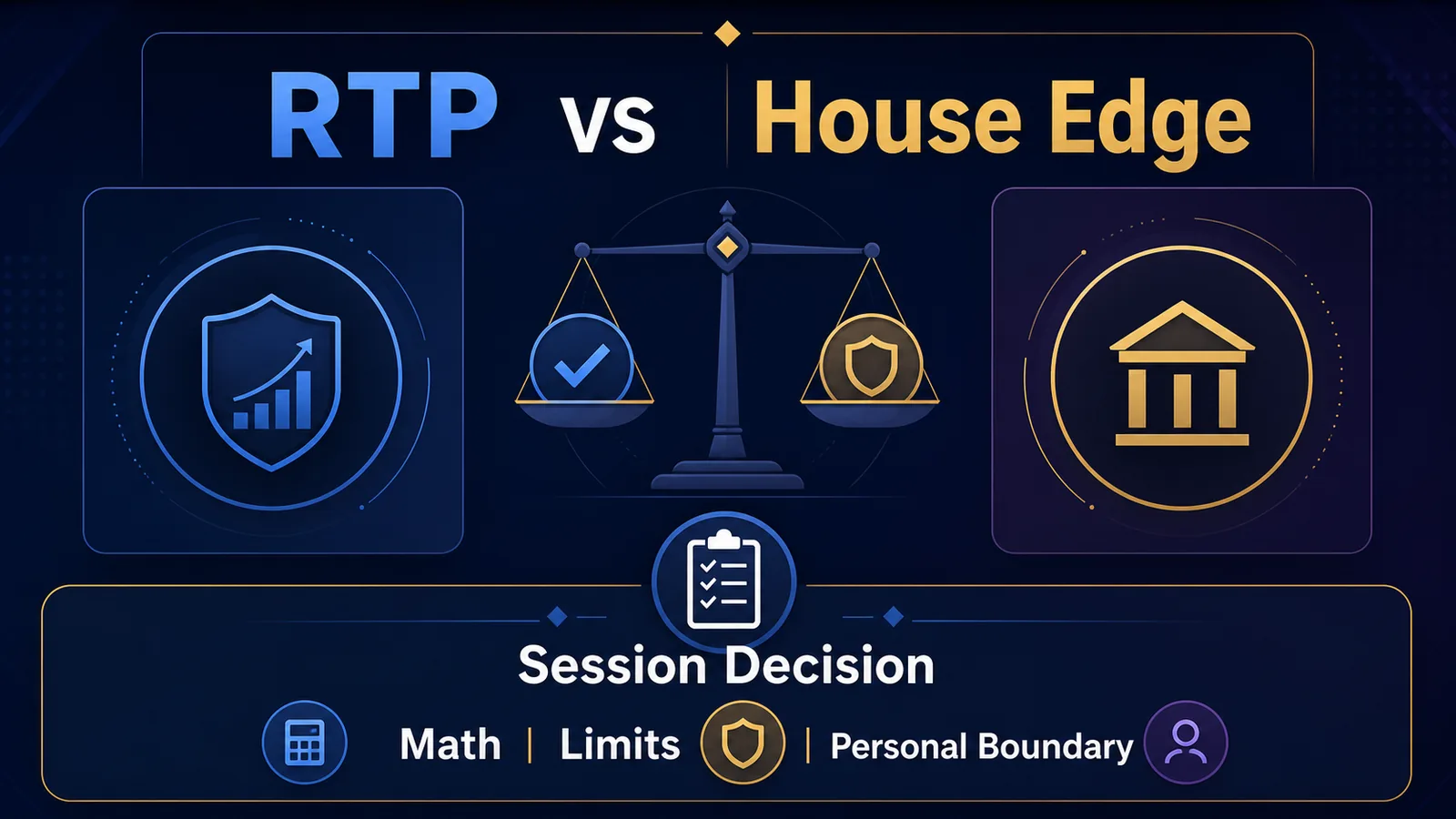
Editorial view: Use RTP and house edge as long-run information, then use rules, bet limits and personal boundaries for the actual session decision.
How to Apply This Check
Use this guide as a short decision routine for RTP and house edge, not as a promise about what a platform, game, payment provider or support team will do next. Begin with the exact screen, rule or message in front of you. Write down the wording before changing settings or repeating an action, because small differences in status labels can change the correct next step.
Next, separate facts from assumptions. A fact is a timestamp, visible status, published rule, transaction reference or support reply. An assumption is a guess that a payment failed, a feature is due, a limit has already applied or another party must be responsible. Keeping those categories apart makes the situation easier to explain and reduces avoidable repeat attempts.
Then compare the information with your own boundary. For a game topic, that means checking the planned stake, time and stop point. For an account or payment topic, it means deciding what information you are comfortable sharing and using only the official recovery or support route. If the details do not match, pause instead of forcing the next action.
A useful record does not need to be complicated. Save the relevant page or message, note the date and time, identify the system that showed the status, and write one clear question for the next reviewer. Do not include a password, one-time code, full payment credentials or unnecessary identity documents in a message or screenshot.
Finally, re-check the current terms before relying on an older explanation. Operators, providers and markets can change labels, limits, eligibility conditions and support routes. This article gives you a way to read the information; the current official page remains the controlling source for the action you take.
What This Guide Does Not Establish
A checklist can improve the quality of a decision without predicting the outcome. It cannot turn a long-run statistic into a short-term expectation, make a pending status resolve faster, override a verification requirement or establish that a particular complaint will be accepted.
If the situation involves a safety boundary, account access, money movement or a responsible-use tool, choose the more conservative step when the facts are unclear. Stop, use the official support channel and keep the record needed for a precise answer. That is usually more useful than relying on a forum comment, a copied screenshot or a confident claim without a source.
What to Check First
- Confirm the exact game or variant.
- Separate RTP from house edge.
- Read volatility and feature notes.
- Compare minimum bet and pace.
| Term | Long-run meaning | Not a promise of |
|---|---|---|
| RTP | Theoretical return percentage | Your next result |
| House edge | Theoretical operator advantage | A fixed loss each session |
| Volatility | Spread and size of variation | A predictable pattern |
| Hit frequency | Frequency of win events | The value of each event |
The two terms in plain language
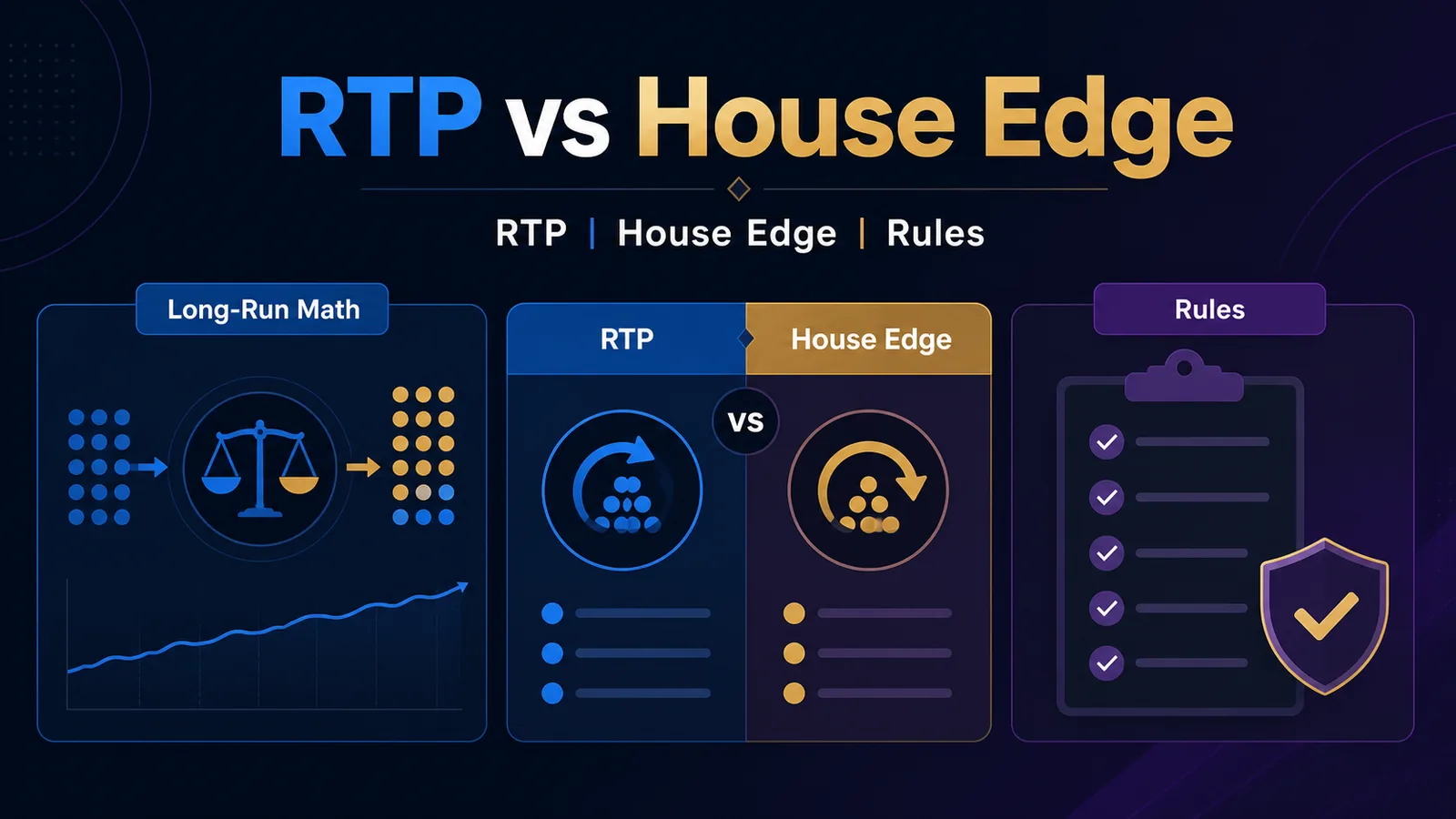
RTP is commonly expressed as a percentage of theoretical return over a very large number of plays. House edge is commonly expressed as the theoretical portion retained by the operator under the stated rules.
A reader should check whether the figure belongs to the exact game or variant being considered. Similar names do not guarantee identical rules or math.
Why short sessions can look different
A long-run average is not a promise that each short session will resemble the average. Random variation can produce results above or below the theoretical figure over a small sample.
Do not use a short result to prove that a game has changed, is due to turn around, or will repeat. Use the published rules and stop plan instead.
What else belongs in the comparison
RTP or house edge is only one part of a game decision. Volatility, hit frequency, table limits, side bets, payout rules, feature conditions and the pace of play can change the experience.
A useful comparison table puts the math term beside the bet range, rule variant, feature notes and budget fit. That produces a decision a reader can actually use.
Responsible interpretation
Math information should reduce confusion, not create pressure to keep playing until an average appears. It cannot tell a reader how much to spend or when a result is due.
If the only reason to continue is an attempt to recover a short-term result, stop. The theoretical figure is not a personal target or a recovery mechanism.
| Factor | Question |
|---|---|
| Rules | Do I understand the exact variant? |
| Cost | Does the minimum bet fit? |
| Pace | Can I decide without rushing? |
| Features | Do I understand the conditions? |
| Limits | What is my stop point? |
Practical Checklist
- Confirm the exact game or variant.
- Separate RTP from house edge.
- Read volatility and feature notes.
- Compare minimum bet and pace.
- Never use long-run math to chase a short result.
Frequently Asked Questions
Is RTP the same as house edge?
They describe related long-run math from different perspectives, but the displayed wording and calculation depend on the game.
Can RTP predict a session?
No. It is a theoretical long-run figure, not a short-term forecast.
What should I compare next?
Check rules, bet limits, volatility, features, side bets and the fit with your personal boundaries.
Sources and Limits
This article is educational and does not promise a result, payout, approval or account outcome. Rules, payment instructions, responsible-use tools and promotions can vary by provider, operator, market and date. Check the current official page before joining, depositing, playing or requesting a withdrawal.
- Pragmatic Play: RTP vs Max Win
Related Reading
- Slot RTP vs Volatility: What Players Should Check First
- Slot Hit Frequency: What It Means and What It Cannot Predict
- How to Read Slot Paytables Before You Play
- Online Casino Session Budget Plan: Limits Before You Play
- Live Blackjack Table Rules: Checks Before You Sit Down
A Clear Next Step
Source and Update Note
Last updated: September 6, 2026. Edited by the Vegas11 content team. This guide is maintained from Vegas11’s own information pages and is written to answer the search task above. Check the current on-screen rules, payment status or operator terms before acting; no article can guarantee a payout, approval, timing or result.
Related Vegas11 references: Slot RTP vs Volatility: What Players Should Check First · Slot Hit Frequency: What It Means and What It Cannot Predict · How to Read Slot Paytables Before You Play · Online Casino Session Budget Plan: Limits Before You Play
Check Vegas11 Details
Review the official sign-in page and current terms, and keep every session within your personal budget and time limits.