

Hit frequency is the share of spins that produce a counted payout under a game definition. A hit can still return less than the amount staked, so the statistic is not the same as the chance of making a profit. It also describes long-run game behaviour rather than predicting when the next win, feature or large payout will appear.
Editorial review: Checked by the Vegas11 editorial team. Updated August 5, 2026. Sources and game or account rules can change; verify the current screen before acting.
Risk reminder: Gambling outcomes are uncertain. No feature, statistic, promotion or account tool guarantees a return or prevents loss. Use only money you can fully afford to lose, follow local law and age rules, and stop when the planned limit is reached.
Key Takeaways
- A counted hit may be smaller than the original stake.
- Hit frequency and RTP answer different questions.
- Two games with similar hit frequency can have very different volatility.
- Past misses do not make a hit due on the next spin.
Define a hit before using the number
A player may hear that a game has a 25 percent hit frequency and imagine that one in four spins will be profitable. That conclusion is too strong. Many definitions count any positive return, including an amount below the stake. A one-unit spin that returns a small fraction can still be recorded as a hit while the balance falls overall.
Some games publish hit-frequency information and many do not. Where the number is available, check whether it refers to any win, a base-game win, a feature trigger or another measure. Without the definition, comparisons can be misleading. The in-game help page or provider rules should take priority over a third-party summary.
- Ask what counts as a hit.
- Separate payout from profit.
- Check whether bonus triggers are included.
- Do not assume the figure applies to every game version.
| Measure | What it describes | What it cannot promise |
|---|---|---|
| Hit frequency | How often a defined return occurs | Profit on the next spin |
| RTP | Long-run theoretical return | A short-session result |
| Volatility | How uneven results may be | Exact win timing |
| Net session change | Your actual credits in and out | Future outcomes |
Hit frequency, RTP and volatility are not substitutes
RTP is a theoretical long-run return percentage under specified conditions. Volatility describes how unevenly outcomes may be distributed. Hit frequency describes how often a counted return appears. A game can produce many small returns and still have the same RTP as a game that produces fewer, more variable returns.
This distinction explains why one slot may feel busy while another includes longer gaps. The feeling is not a forecast. A short session can fall anywhere within a wide range of outcomes, and the headline statistics do not guarantee that the session will resemble the long-run model.
- RTP: long-run theoretical proportion.
- Volatility: distribution and size variation.
- Hit frequency: counted return frequency.
- Session result: one short and uncertain sample.
Use the return-versus-profit filter
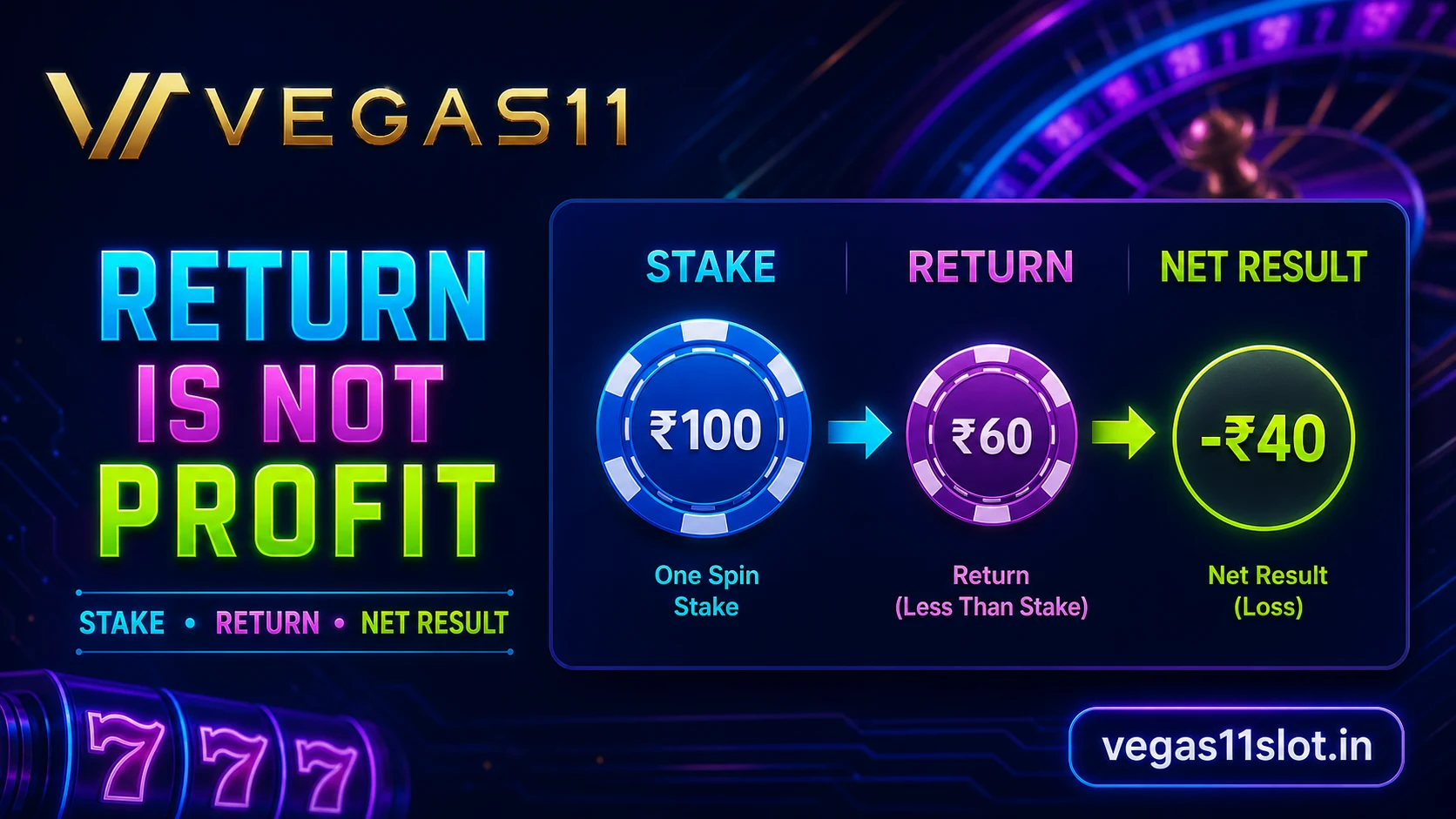
A simple session note can prevent a common misunderstanding. Record the stake, the amount returned and the net change for a small sample of spins. Mark a return as net-positive only when it exceeds the stake. This is not a strategy for beating the game; it is a way to understand what the game screen is reporting.
If ten spins contain four animations but only one return above the original stake, the player has seen several hits but few profitable spins. The exercise makes it easier to resist marketing language that treats every animation as success. Stop the sample when the planned entertainment budget or time limit is reached.
- Stake: amount deducted for the spin.
- Return: amount credited by the result.
- Net change: return minus stake.
- Session balance: total effect across all spins.
| Spin | Stake | Return | Net result |
|---|---|---|---|
| 1 | 1.00 | 0.20 | -0.80 |
| 2 | 1.00 | 0.00 | -1.00 |
| 3 | 1.00 | 1.50 | +0.50 |
| 4 | 1.00 | 0.40 | -0.60 |
Why streaks do not create a schedule
Several misses in a row can feel like evidence that a hit is approaching. That is the gambler’s fallacy. In a properly functioning random game, previous independent results do not create a debt that the next spin must repay. The same caution applies after several wins; a streak is not proof that the game is now favourable.
Do not respond to a dry stretch by increasing the stake to recover losses. A higher stake increases the amount at risk on the next independent result. If the session is no longer comfortable, use the stop point chosen before play rather than waiting for a statistic to become due.
- A miss does not move a hidden queue forward.
- A recent hit does not prove a hot period.
- Increasing stake changes exposure, not certainty.
- A stop rule should be set before emotion rises.

What to do when the number is not published
Do not reverse-engineer a reliable hit frequency from a few dozen personal spins. The sample is too small and may omit feature definitions, partial returns or changing bet settings. Reviews can provide context, but they should identify the source and game version. Unsupported precise percentages are a warning sign.
You can still evaluate readability. Check the paytable, RTP information where shown, volatility label, minimum stake, feature rules and game-history access. If essential information is missing or difficult to find, choose another game rather than filling the gap with guesses.
- Look for provider or in-game documentation.
- Treat unsourced percentages as unverified.
- Do not use a short personal log as a probability estimate.
- Prefer games with clear help and history screens.
A safer way to use the concept
Hit frequency can help explain why games feel different, but it should not decide the size of a stake or justify a longer session. Use it as a descriptive label beside other rules. The useful question is not “when will it hit?” but “do I understand what a hit means, and is this pace comfortable within my fixed limit?”
If frequent small animations encourage repeated play or make losses less visible, slow the session down. Disable autoplay, review the balance at fixed intervals and take a break. Entertainment value is personal, but the budget should remain money that is fully affordable to lose.
- Use descriptive statistics, not predictions.
- Review net balance, not animation count.
- Keep autoplay off when pace is hard to track.
- Pause when the planned limit is reached.
Reader scenario: four hits but a lower balance
A player sees four win animations in ten spins and assumes the game is performing well. The account balance is still lower because three of those returns were below the stake. Counting animations hid the actual net change.
The useful correction is to review stake and return together. No extra spins are needed to prove the point. If the planned limit has been reached, end the session rather than waiting for the hit count to translate into profit.
Questions to ask when you see a hit-frequency claim
- What exactly counts as a hit?
- Is the figure tied to the same game version and bet mode?
- Does the source distinguish a return from a net-positive spin?
- Am I using the number to explain pace rather than predict results?
FAQ
Does a 30 percent hit frequency mean three profitable spins in ten?
No. It describes a long-run counted-return rate, and some counted returns may be below the stake. Any ten-spin sample can also differ.
Is higher hit frequency always better?
No. It may mean more frequent small returns, but it does not by itself show RTP, volatility or session profit.
Can I calculate the true rate from my recent history?
A short personal sample is not reliable enough. Use provider or in-game documentation when available.
Source and Update Note
This article was checked on July 14, 2026 for the search intent “slot hit frequency explained”. It uses the sources below as general evidence. Game rules, promotion terms, app settings, account tools and support procedures can change by operator, version and jurisdiction. Verify the current page or help screen before making a money, privacy or account decision.
- Slot Hit Frequency Explained — Same-intent benchmark reviewed July 14, 2026.
- UK Gambling Commission RTP guidance — Used to distinguish theoretical RTP from a short-session outcome.
Related Reading
- Slot RTP vs Volatility: What Players Should Check First
- How to Read Slot Paytables Before You Play
- Online Casino Session Budget Plan: Limits Before You Play
- Responsible Gaming Tools: Limits, Breaks and Self-Control Basics
Check Vegas11 Details
Review the official sign-in page and current terms, and keep every session within your personal budget and time limits.