

A ₹1,000 return looks more impressive than a ₹50 return. But if the first cost ₹100 and the second cost ₹5, both are the same 10× gross return. Raising the stake does not, by itself, establish better slot odds. Any change in probability or feature eligibility needs support in the exact game rules; if the cost or condition is unclear, do not increase the bet.
Compare the same result at different stakes
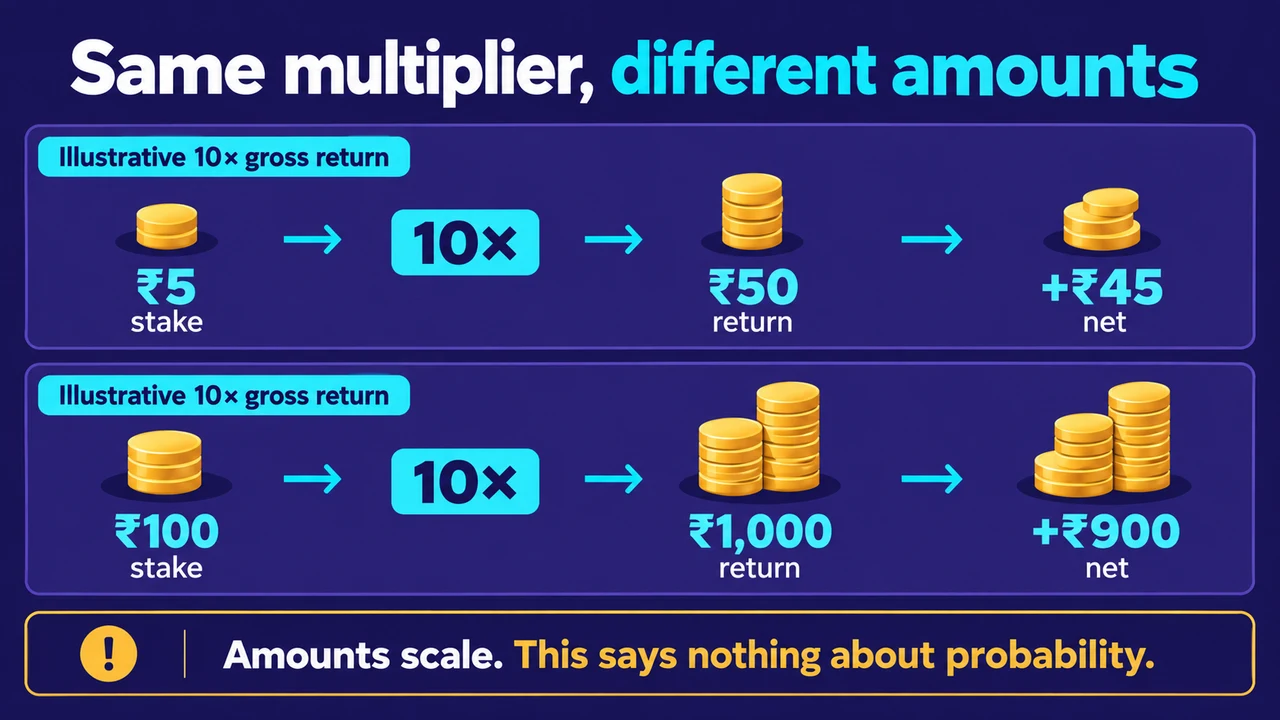
The simplest way to untangle the claim is to hold the result constant. The examples below assume a game pays the same 10× total-stake multiplier at each listed amount. They are arithmetic illustrations, not JILI outcomes, game odds or a prediction that any of these returns will occur.
| Total stake | Illustrative gross return at 10× | Net result after stake |
|---|---|---|
| ₹5 | ₹50 | +₹45 |
| ₹20 | ₹200 | +₹180 |
| ₹100 | ₹1,000 | +₹900 |
The larger stake scales both sides of the result. If the spin instead returns nothing, the loss is ₹5, ₹20 or ₹100 respectively. The table contains no probability information at all. It shows why a screenshot of a larger payout cannot demonstrate that a larger bet was more likely to produce that payout.
A maximum-win figure creates a similar confusion: a larger advertised ceiling is not a more frequent result. Our explanation of slot maximum wins covers the stake basis and cap separately. Check whether a displayed amount is a gross award, a net change or a limit before comparing it with another screen.
There are three different changes you might be making
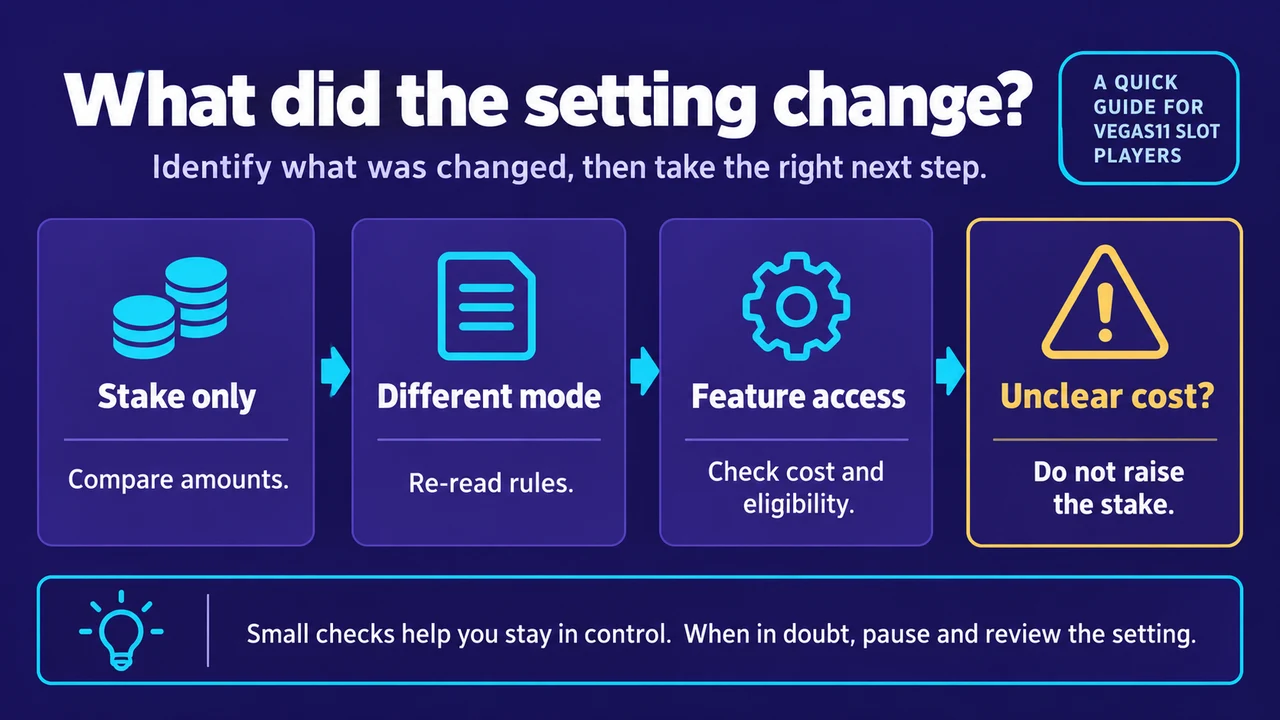
- Changing the total stake while retaining the same rules and mode: amounts may scale, but do not infer a probability change.
- Changing lines, denomination, game variant or paid mode: compare the applicable rules again rather than assuming the same calculation.
- Buying access to a feature or meeting a stated jackpot condition: read its separate cost and eligibility wording. Access is not a guaranteed profitable result.
Those changes can look similar in a small mobile control panel. A coin value is not necessarily the final cost per spin, and a feature option may add a charge. Read the amount that will actually be deducted. If the rules describe a distinct mode, it needs its own explanation; it should not be described as an ordinary higher bet magically becoming luckier.
The UK Gambling Commission’s rules-and-payout information standard is a useful example of the information that can support a decision. It is not evidence that a particular JILI title requires maximum bets or offers a specific jackpot. This article makes no such provider-wide claim. Use the exact game’s help panel and current terms.
A streak does not answer the rules question
After several returns in a row, raising the stake can feel like catching momentum. After losses, it can feel like giving the game one more chance to recover. Neither reason identifies a rule that improves the next opportunity. What you know for certain is the new amount at risk, not that a bonus is getting closer.
The UK random-outcome standard treats unpredictable outcomes and accurately implemented rules as regulatory requirements. Use that as background, not as a certificate for the game on your screen. Some features have a recorded state under their own rules; the existence of a meter is still not permission to invent a trigger probability or change your budget.
This is why “bet more when a bonus is about to arrive” is poor guidance unless the rule actually states what condition has been reached. Even then, a feature’s eligibility and cost are separate from its return. A teaser animation or another player’s timing trick does not supply the missing rule.
Choose the amount before the result tempts you
Suppose the amount you can afford to lose for optional entertainment is ₹500. At ₹5 per paid spin, 100 zero-return spins would use that amount. At ₹100, five would. This is only a spending illustration: real returns may alter a balance, and the calculation does not prescribe a session length or tell you how many spins to buy.
Set the money and time boundary first using a session budget plan. A smaller stake reduces the amount exposed on each paid spin; it does not make gambling harmless or entitle you to extend the session. If the only reason to raise the amount is recovering a loss or copying a highlight clip, stop and review the decision.
For controls that combine lines, coins and feature charges, the slot rules-page guide is the next useful read. You should be able to name the final cost, describe any mode change and identify the source of an eligibility condition. You do not need to place a paid spin to find out whether you understand those items.
Source and update note
Updated October 2, 2026. Vegas11 editorial explanation using labelled arithmetic and the public UK regulatory standards linked above. No JILI bet-tier, jackpot or bonus-buy rule was independently verified. The earlier advice to increase stakes during streaks or before a suspected bonus has been removed. For adults legally eligible where they are; check the current game rules before any participation.
This update was prepared with AI assistance and reviewed separately for clarity and source limits. It does not include a firsthand test of the platform.
Check Vegas11 Details
Review the official sign-in page and current terms, and keep every session within your personal budget and time limits.