

A JILI game goes quiet for a while, and the next question is often whether it is fair. That run of results cannot answer the question. Neither can a provider logo or a few winning screenshots. Look for evidence tied to the exact game, version and operator; if those details cannot be matched, leave the claim unverified and do not deposit to test it.
Start with the claim being made
“Fair” can mean several different things in a casino conversation. One person means that outcomes follow the published rules. Another means that the game is independently tested. A third means that the operator pays withdrawals. Those are separate questions, and evidence for one does not settle the others. A game can have clear rules while the account terms remain unsuitable for a reader.
For this guide, fairness means a game operating according to its stated rules and probabilities. It does not mean balanced results in every session, a short wait for a bonus or protection from losing the money staked. We have not independently tested the JILI build delivered through a Vegas11 account, so this page cannot certify it or rank JILI above another provider.
What a useful evidence trail looks like
| Evidence | Question it can help answer | Boundary |
|---|---|---|
| Current game information | What rules and version are displayed? | A screen alone is not independent testing. |
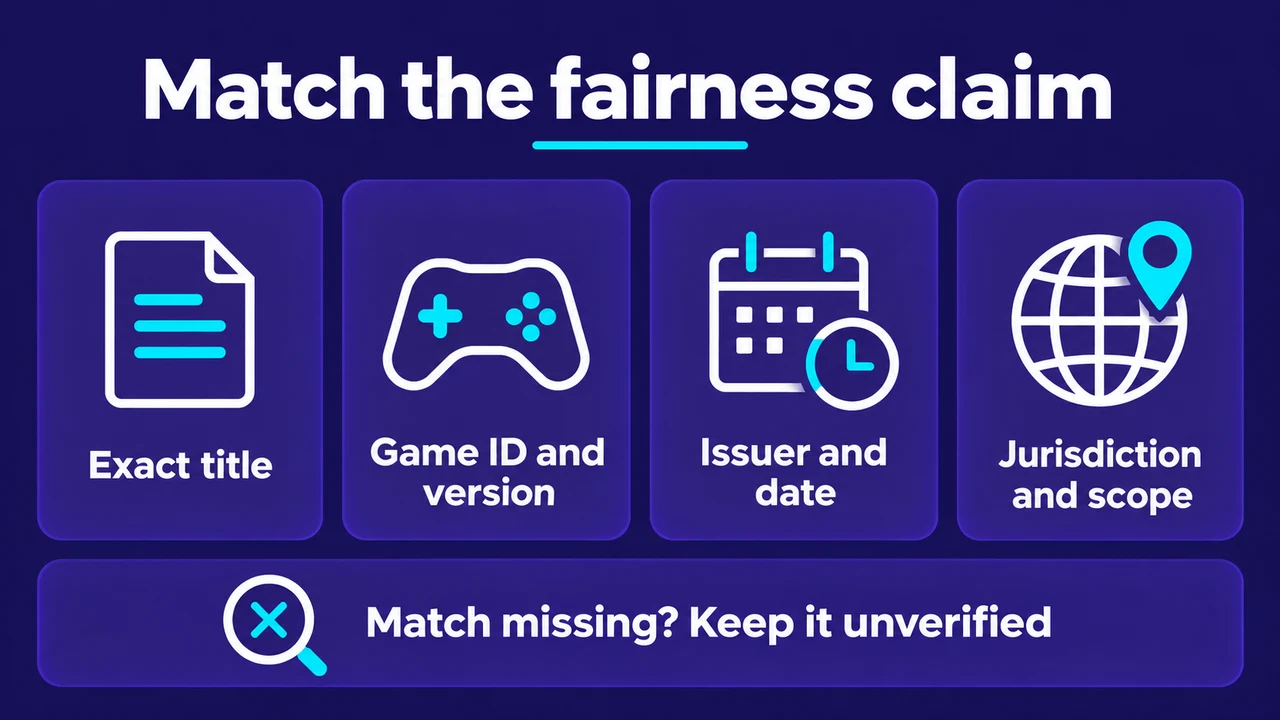
| Identifiable testing or approval record | Which game or system was reviewed? | Match issuer, date, version and jurisdiction. |
| Operator identity and terms | Who handles the account and disputes? | A provider record does not verify the operator. |
| Short session or win clip | What happened in that sample? | It cannot establish fairness or future odds. |
There is a real public record worth distinguishing from a marketing badge: PAGCOR’s JILI approved-games list dated 20 November 2025 identifies individual titles, game IDs and versions for its stated electronic-games context. That is a scoped, dated document. It does not establish that a similarly named title on an India-facing website is the same deployed build, that the website is licensed, or that its account and withdrawal procedures have been approved.
If a site displays a certificate, first read the subject named on it. Is it for a random-number system, one game, a platform or a company? Follow the issuer’s verification route where available, rather than relying on an image hosted by the party making the claim. An unreadable badge with no traceable record leaves the question open; it is not a reason to trust or accuse the business.
A losing streak is not a fairness test
The UK Gambling Commission’s random-outcome standard describes unpredictability and rule-consistent results as requirements within its regulatory scope. It is a useful benchmark for understanding the word random, not proof of JILI or Vegas11 compliance. It also allows properly described feature rules; do not flatten every game into a claim that nothing can ever carry between spins.
A quiet stretch, a cluster of bonuses or a near miss gives you a small outcome sample. It does not tell you whether the software matches a certified version. Counting losses until the game “must pay” cannot repair that evidence gap. A displayed feature meter should be interpreted from its rules, while an ordinary recent-result streak should not be treated as a promise that the next spin changes. For the separate question of why past results feel like patterns, see our discussion of slot cycles and RNG; a pattern explanation does not verify a deployed game or certify an operator.
Keep the game question separate from the account question
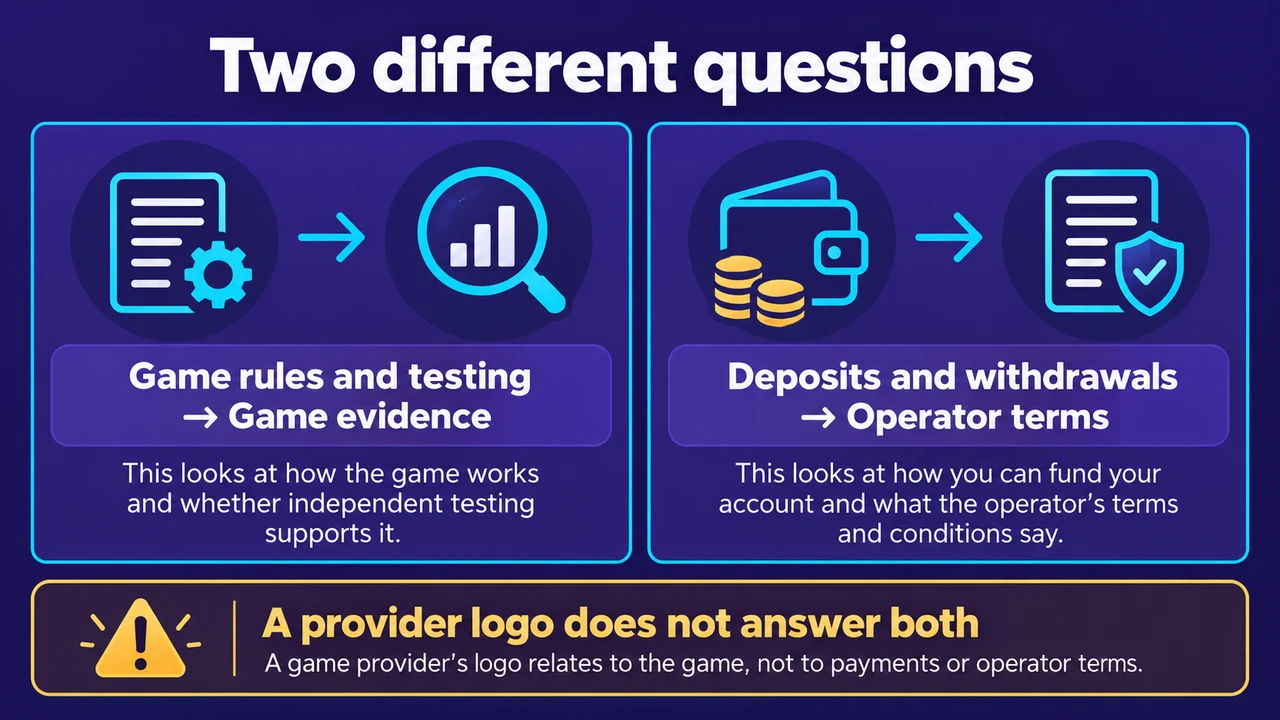
A provider name says little about where your deposit goes or who handles a dispute. Our guide to provider and operator responsibilities helps identify which source belongs to which question. For a game-rule issue, record the title, the relevant rule and the game reference. For a withdrawal issue, the operator’s terms and account record matter instead.
Do not send passwords, one-time codes or full payment details to someone claiming they can verify a game’s fairness. You can ask support for the exact provider, build identifier and public testing or approval reference without exposing those details. If the answer is only “everyone wins here,” you still do not have the requested evidence.
An unanswered question can stay unanswered
A missing version number does not automatically prove manipulation. It does mean you cannot complete a version match. Record that as unknown rather than replacing it with the highest RTP on a comparison site or a popular player’s recommendation. The practical decision can be to leave the game unopened until the information is clear.
Before making a broader platform judgment, use the casino review methodology to examine the criteria and limits of the evidence. A fair game is not a low-risk investment, and a useful review should be able to say what it did not verify. Only adults permitted to gamble where they are should consider participation; a foreign approval record does not resolve local eligibility.
Source and update note
Updated October 2, 2026. Vegas11 editorial guidance based on the public regulatory sources linked above and a review of the earlier article. The revision removes claims about predictable JILI cycles, guaranteed bonus timing and brand superiority. No private gameplay, certification match or withdrawal test was performed.
This update was prepared with AI assistance and reviewed separately for clarity and source limits. It does not include a firsthand test of the platform.
Check Vegas11 Details
Review the official sign-in page and current terms, and keep every session within your personal budget and time limits.