

Quick answer: There is no baccarat strategy that can guarantee a result. Players can still make calmer decisions by understanding banker, player and tie bets, table rules, limits, pace and stop points before joining a live or online table.
By Vegas11 Editorial Team – Published August 3, 2026 – For adult readers only.
This guide is for entertainment-focused readers. Game rules, account checks, payment routes and platform terms can change, so read the official page before joining or playing and keep every session inside your own budget and time limits.
Key Takeaways
- No betting system can promise outcomes.
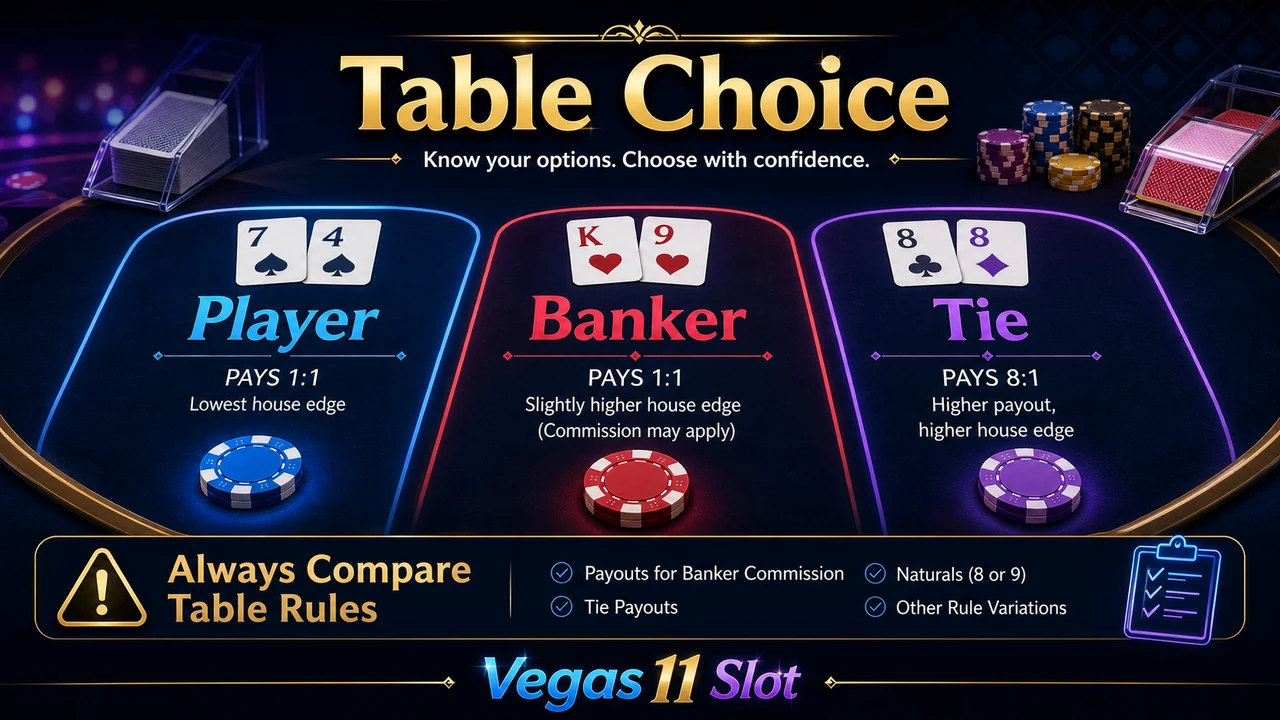
- Banker, player and tie bets have different rules.
- Table pace affects decisions.
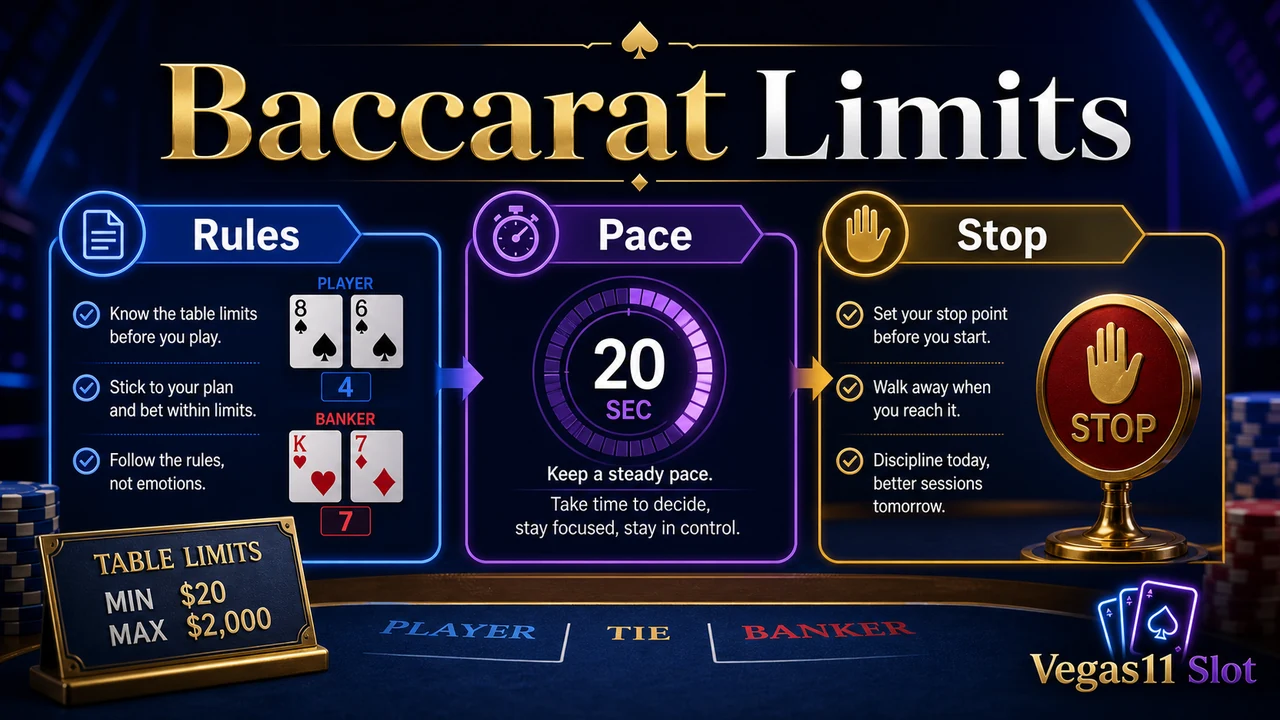
- A stop point should be set before the first hand.
Baccarat Bet Review
| Bet area | What to review | Caution |
|---|---|---|
| Banker | Commission or table rule notes. | Rules can differ by table. |
| Player | Standard payout notes. | Still uncertain each hand. |
| Tie | Higher payout style on many tables. | Often more volatile for players. |
| Side bets | Extra conditions and cost. | Skip until fully understood. |
What strategy can and cannot do
A strategy can help you make consistent decisions. It cannot remove uncertainty or make a future hand certain.
Treat strategy as a way to organize behavior: choose a table, set a stake, know when to stop and avoid rushed side bets.
Why table rules come first
Different live tables can have different limits, speed and rule notes. A player should know those details before placing a bet.
Watch the table if the timer feels fast. Waiting a round is better than making a decision before understanding the screen.
Avoid pattern chasing
Baccarat scoreboards can make streaks feel meaningful. They are part of the live table experience, but they should not become a promise about the next hand.
Use the scoreboard as history, not instruction. If it makes you increase stakes outside the plan, pause.
Safer Table Routine
| Step | Why it helps |
|---|---|
| Read table limits | Controls session cost. |
| Watch one round first | Shows pace and screen clarity. |
| Avoid chasing patterns | Past hands do not promise the next hand. |
| Stop at the set limit | Keeps the session planned. |
Practical Checklist
- Read table rules before joining.
- Understand banker, player and tie bet notes.
- Skip side bets you cannot explain.
- Set a limit before the first hand.
- Avoid raising stakes because of patterns.
Three-Step Decision Framework
First, identify the exact action the page is asking you to take. For baccarat strategy limits, that may be joining a table, choosing a stake, accepting a bonus, reviewing a payment detail or continuing a session after a result. Name the action before you tap anything.
Second, compare that action with your personal limit. The useful question is not whether the screen looks exciting, but whether the cost, rule, time window and account step still fit the plan you set before opening the game or payment page.
Third, decide what would make you stop. A clear stop signal might be unclear terms, a rushed timer, a payment detail you cannot verify, a support question that needs records, or the feeling that you are continuing only to recover a previous outcome.
Common Mistakes to Avoid
- Treating a previous game result as a signal for the next one.
- Accepting a bonus before checking wagering, expiry, eligible games and withdrawal impact.
- Increasing stake size because the screen pace feels exciting or because a feature looks close.
- Sending private login, OTP or full payment details through the wrong channel.
- Continuing after the session no longer matches the budget or time limit chosen at the start.
What Good Looks Like
A good decision is easy to explain afterward. You can name the rule you checked, the amount involved, the account or payment step you used, and the reason the action stayed within your plan.
A weak decision usually feels vague. It depends on a lucky feeling, a rushed timer, an unclear bonus condition or a hope that the next screen will fix the previous one. When the reason sounds vague, pause and return to the checklist.
Editorial View
Baccarat decisions can be structured, but no staking pattern or table habit makes a result guaranteed.
The practical test is simple: if you cannot explain the rule, amount, timing or account step before acting, slow down and read the official information again.
Mobile Review Notes
Most readers check these guides from a phone. Keep the screen readable, confirm amounts before tapping and avoid using fast features when you are still learning the rules.
Support and Records
For support questions, keep records specific and privacy-safe. Save dates, game names, transaction IDs or account-page context when relevant, but do not send passwords, one-time codes or complete payment credentials.
FAQ
Is there a guaranteed baccarat strategy?
No. Baccarat has rules and bet choices, but outcomes remain uncertain.
Should beginners use side bets?
Beginners should understand the main bets and table rules first.
Can scoreboards predict the next hand?
No. Treat scoreboards as history, not a reliable forecast.
Source and Update Note
This article was prepared by the Vegas11 Editorial Team using the current site topic plan, public-facing game and account guidance, and responsible-play editorial checks. It does not replace official game rules, payment terms or account notices.
The editorial review considered public guidance on RTP framing, fair terms, account privacy and problem-gambling support resources. Always follow the current terms shown on the official platform page before joining, depositing or playing.
- UK Gambling Commission RTP guide
- UK Gambling Commission fair and transparent terms
- National Problem Gambling Helpline
- FTC Online Privacy and Security
Related Reading
- How to Read Slot Paytables Before You Play
- Responsible Slot Play: Budget and Session Limits
- Casino Bonus Terms Checklist for Safer Play
- Online Casino Deposit Guide: Checks Before Adding Funds
Check Vegas11 Slot Details
Review the official page, read the current terms and keep your session within your personal limits.