

A reality check is a timed reminder during play; a time-out or cool-off blocks or pauses access for a set period. Set the tool before the session and decide what happens when it appears: review elapsed time and balance, then stop when the pre-set condition is reached. If alerts are dismissed automatically, use a longer break or stronger restriction.
Editorial review: Checked by the Vegas11 editorial team. Updated August 26, 2026. Sources and game or account rules can change; verify the current screen before acting.
Risk reminder: Gambling outcomes are uncertain. No feature, statistic, promotion or account tool guarantees a return or prevents loss. Use only money you can fully afford to lose, follow local law and age rules, and stop when the planned limit is reached.
Key Takeaways
- Set the interval before play, not after losing track of time.
- Attach a specific action to every reminder.
- A cool-off period is stronger than a dismissible alert.
- Repeated override is a signal to stop and seek additional support.
Match the tool to the problem
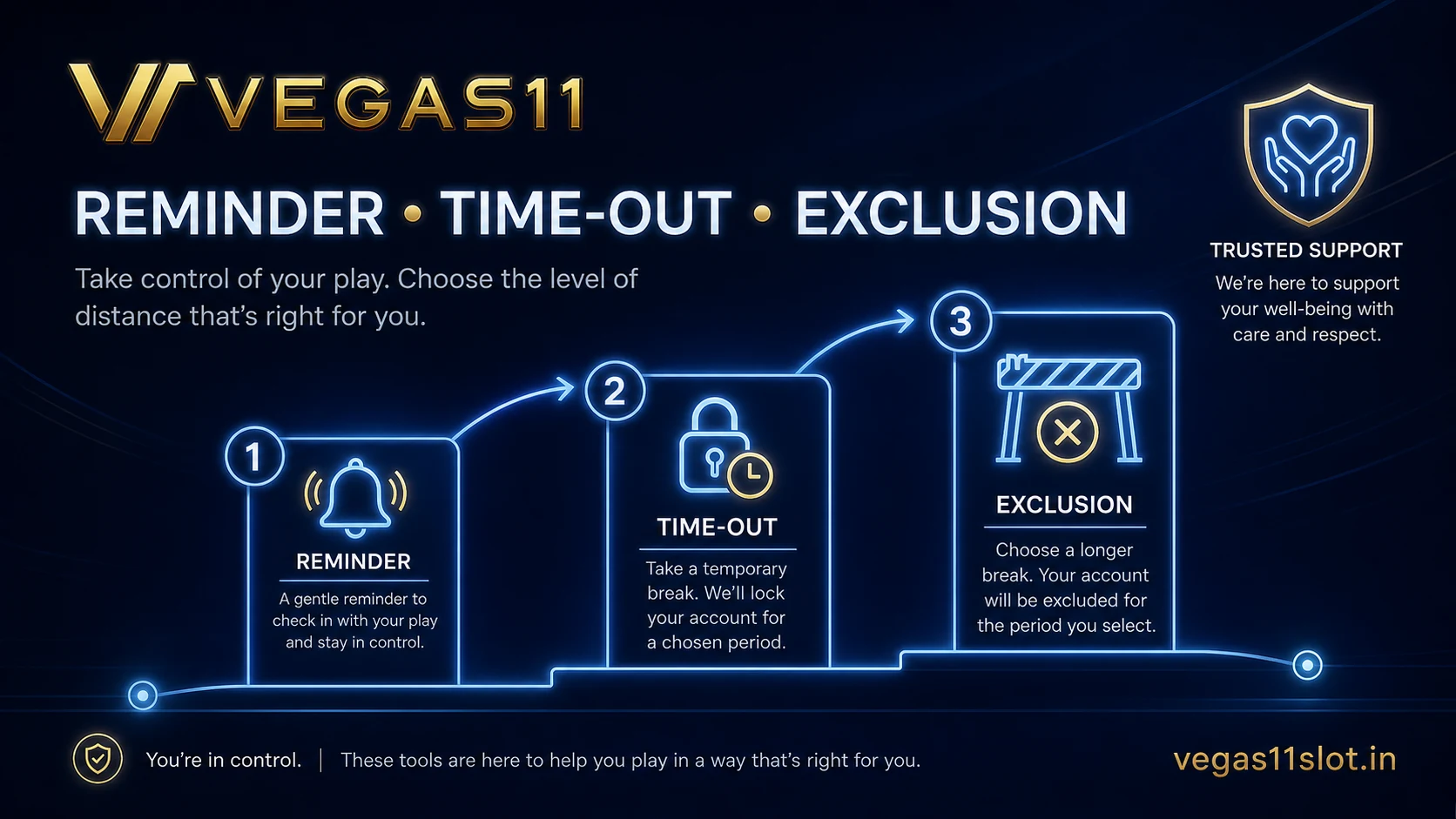
A reality check interrupts the session and shows that time has passed. It is useful when the player still wants a prompt to review the plan. A time-out or cool-off removes immediate access for a period, which is more suitable when a reminder is unlikely to be respected.
Deposit, loss or time limits address other parts of the session. Self-exclusion is a stronger step for someone who needs support to stop gambling rather than manage one session. Tool names and availability vary by operator and jurisdiction, so check the account settings and support page.
- Reminder: awareness prompt.
- Time limit: session-duration boundary.
- Cool-off/time-out: temporary access break.
- Self-exclusion: stronger stop arrangement.
- External blocking or support: additional layer.
| Tool | Purpose | Use when |
|---|---|---|
| Reality check | Interrupt and review | A prompt can still change the decision |
| Time/deposit limit | Set a measurable boundary | A fixed cap supports the plan |
| Cool-off/time-out | Create temporary distance | Alerts are being overridden |
| Self-exclusion | Support stopping access | Gambling is harmful or control is lost |
| External support/blocking | Add barriers and help | One account setting is not enough |
Choose an interval that changes behaviour
An interval is useful only if it arrives before attention and judgment have faded. A two-hour reminder may be too late for a short planned session. A shorter interval gives more opportunities to review, but repeated pop-ups can become easy to dismiss. Start with the planned session length and place the reminder before the end.
Write the response rule in advance: stand up, close autoplay, read the balance, compare with the starting amount and decide whether the stop condition has been met. If the alert can be dismissed without doing those steps, the tool is not performing its purpose.
- Reminder arrives before the planned end.
- Autoplay stops or is paused.
- Elapsed time and balance are reviewed.
- A pre-written stop decision is applied.
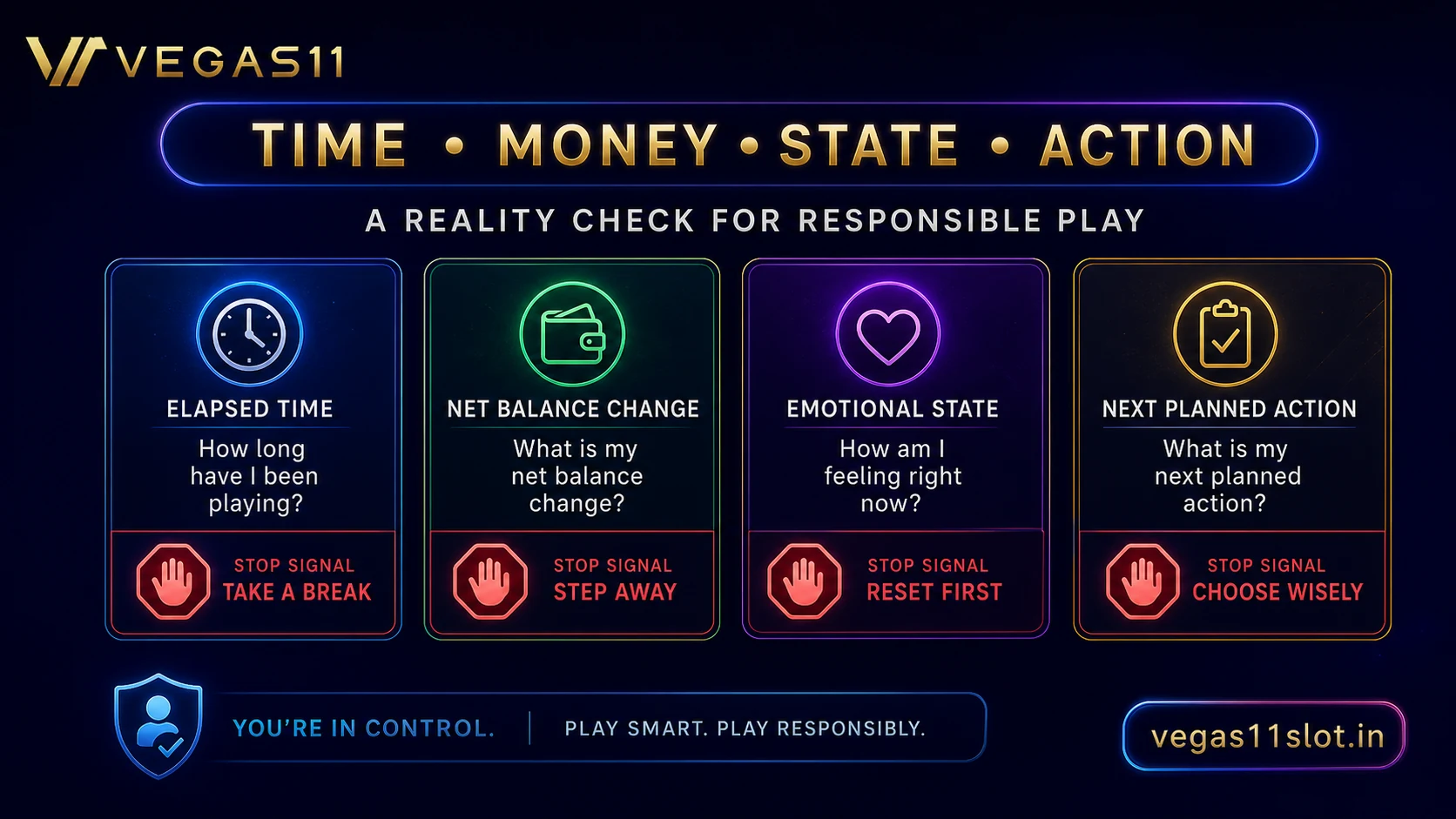
Use a three-question response script
When the alert appears, ask: How long have I been playing? What is the net change from the starting balance? Am I calm enough to follow the plan without chasing? Answer before clicking continue. The third question matters because frustration or excitement can turn a neutral reminder into an automatic tap.
If any answer is unclear, end the session and check history later. Do not keep playing while calculating losses or searching for a recovery spin. A reminder is not a challenge to prove control; it is an opportunity to stop.
- Time: compare with planned duration.
- Money: compare with starting balance and budget.
- State: notice chasing, urgency or concealment.
- Action: stop when any boundary is crossed.
| Question | Evidence | Stop signal |
|---|---|---|
| How long? | Timer and planned duration | At or beyond limit |
| Net change? | Starting and current balance | Budget boundary reached |
| How do I feel? | Urgency, anger, excitement | Chasing or automatic decisions |
| What now? | Written plan | Any boundary crossed |
Know when to escalate to a stronger tool
If reminders are dismissed without review, shorten the interval once or move to a time-out. If the player repeatedly returns after a time-out, spends beyond limits or hides activity, self-exclusion and professional support may be more appropriate. The decision should not wait for a severe financial event.
External blocking software, payment-card blocks and help services can add distance from gambling access. Availability differs by country. Use resources that serve the reader’s location and verify them through official or recognised organisations.
- Automatic dismissal of alerts.
- Repeated limit changes.
- Chasing after losses.
- Using money needed for essentials.
- Concealing time or spending.
Check how the operator implements the tool
Before relying on a setting, confirm when it takes effect, how long it lasts, whether it covers all products and how it can be changed. Some limit increases may have a delay while decreases apply sooner; exact rules differ. Save the confirmation screen and support reference.
A responsible control should be easy to find and difficult to bypass accidentally. If the operator does not explain the tool or allows immediate cancellation despite a stated cool-off, contact support and consider avoiding the service. Do not assume a marketing page proves the setting is active on the account.
- Effective timestamp.
- Products and accounts covered.
- Minimum and maximum duration.
- Change or cancellation process.
- Confirmation record.
Treat the tool as one layer, not a guarantee
No setting can guarantee that harm will not occur. A player can use other sites, devices or payment methods unless additional barriers are added. The tool works best with a clear budget, support from another person and reduced access to funds when needed.
If gambling is causing distress, debt or loss of control, the next step is not a better reminder configuration. Stop and contact a qualified local help service. Immediate safety or self-harm concerns require emergency support in the reader’s location.
- Combine account tools with practical barriers.
- Tell a trusted person when support is needed.
- Use local professional help for loss of control.
- Use emergency services for immediate danger.
Reader scenario: every alert is dismissed
A player set a 30-minute reminder but clicks continue without checking the balance. The tool is now background noise. Making the pop-up more colourful will not fix the behaviour.
The appropriate next step is to stop the session and activate a time-out or cool-off before returning. If the pattern repeats, use self-exclusion or external support rather than relying on another dismissible alert.
Session-control setup checklist
- I chose the tool before play and saved the confirmation.
- My reminder has a specific time, money and emotion response.
- I know when repeated override means a time-out or stronger step.
- I have a local support option if gambling is no longer controlled.
FAQ
What is a gambling reality check?
It is a timed reminder intended to interrupt play and show that time has passed, often with session information.
Is a cool-off the same as self-exclusion?
No. A cool-off is usually temporary, while self-exclusion is a stronger arrangement designed to support stopping. Exact rules vary.
What if I keep dismissing reminders?
Stop the session and use a stronger barrier such as a time-out. Repeated override can be a sign that additional support is needed.
Source and Update Note
This article was checked on July 14, 2026 for the search intent “gambling reality checks cool off tools”. It uses the sources below as general evidence. Game rules, promotion terms, app settings, account tools and support procedures can change by operator, version and jurisdiction. Verify the current page or help screen before making a money, privacy or account decision.
- Reality Checks guide — Same-intent benchmark reviewed July 14, 2026.
- UK Gambling Commission management-tools research — Official overview of limits, reality checks, time-outs and blocking tools.
- Take Time To Think — Safer-gambling tool awareness resource.
Related Reading
- Responsible Gaming Tools: Limits, Breaks and Self-Control Basics
- Online Casino Session Budget Plan: Limits Before You Play
- Casino Login Security Checklist: Passwords, OTP and Devices
- Mobile Casino Privacy and Security: Practical Checks for Players
Check Vegas11 Details
Review the official sign-in page and current terms, and keep every session within your personal budget and time limits.