

Return to Player is one of the most referenced metrics in slot selection, yet it is often used without context. Many players assume that higher RTP automatically leads to better results. In practice, especially within short playing sessions, this assumption frequently breaks down. A functional slot strategy must evaluate RTP in relation to session length, volatility, and budget constraints rather than treating it as a standalone indicator. (vegas11)
RTP Describes Long-Term Efficiency, Not Session Outcomes
RTP represents the theoretical return of a slot game across extremely large sample sizes. It is not designed to predict what happens in a single session or even across multiple short sessions.
In short play windows, variance dominates results. This means that the mathematical advantage of higher RTP may never materialize before the session ends. Slot strategy fails when RTP is interpreted as a short-term performance guarantee rather than a long-term efficiency measure.
Why Medium RTP Can Perform Better in Short Sessions
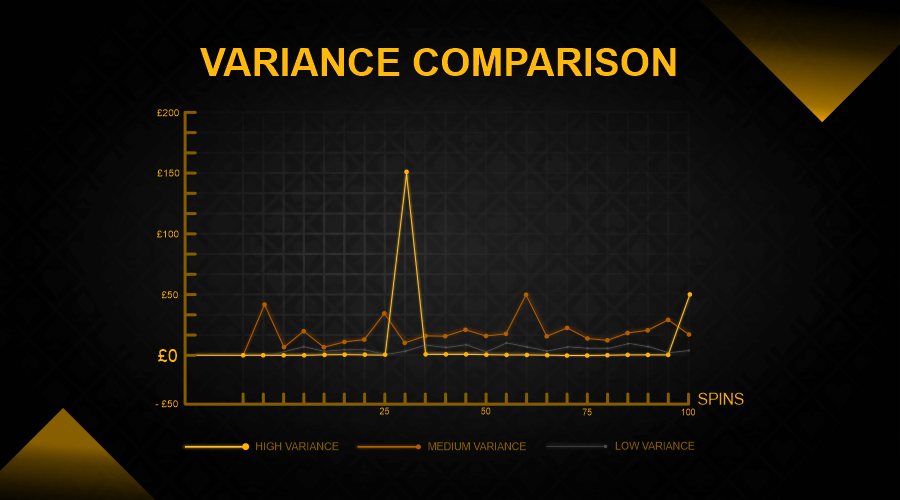
Medium RTP slots are often paired with more balanced volatility profiles. While their long-term efficiency may be slightly lower, their payout distribution is frequently smoother.
In short sessions, smoother distribution matters more than theoretical return. Players experience:
- Slower bankroll depletion
- More frequent balance stabilization
- Lower emotional pressure
From a decision-making perspective, medium RTP slots can outperform high RTP slots when session length is limited. This is a core insight that many surface-level slot strategy guides fail to address.
High RTP Often Comes with Structural Trade-Offs
High RTP slots frequently rely on bonus concentration or high volatility mechanics to deliver their return. These mechanics assume extended exposure.
In short sessions, this structure becomes a disadvantage. The player absorbs variance without reaching the statistical depth required for RTP to express itself. The result is not inefficiency, but misalignment between game design and play behavior.
Effective slot strategy recognizes that high RTP is only beneficial when time and budget allow probability to normalize.

Session Length Is the Missing Variable in RTP Discussions
Most RTP comparisons ignore session duration. This omission leads to incorrect conclusions.
Short sessions amplify variance and reduce the practical relevance of RTP differences. A one to two percent RTP advantage is statistically meaningless if the session ends before enough spins occur. Slot strategy must therefore begin with session planning, not RTP ranking.
Decision Framework for RTP Selection
Rather than asking which RTP is higher, experienced players ask whether RTP aligns with how they actually play.
A practical framework:
- Short sessions → medium RTP with moderate volatility
- Long sessions → higher RTP becomes relevant
- Limited budget → stability over theoretical efficiency
This approach transforms RTP from a marketing number into a contextual decision tool.
Platform Transparency and RTP Interpretation
Clear RTP disclosure helps players make informed decisions, but it does not eliminate misinterpretation. Platform structure influences how RTP information is processed.
Vegas11 serves as a useful reference because RTP visibility supports comparison, but disciplined interpretation remains essential. Information does not replace strategy. (vegas11)

Frequently Asked Questions
Is higher RTP always better
Only in sufficiently long sessions with aligned volatility.
Can medium RTP slots be safer
Yes, especially in short sessions with limited budgets.
Does RTP affect winning chances per spin
No, it affects long-term averages only.
Why do high RTP slots feel worse sometimes
Because variance dominates short play windows.
Should beginners ignore RTP
No, but they should not overvalue it.
What matters more than RTP
Session length, volatility, and budget control.
Authority Data and Industry Resources
https://www.statista.com/topics/1743/online-gambling
https://www.igamingbusiness.com
https://www.casinocity.com