

A ₹1,000 Banker win at 0.95:1 gives ₹950 profit and returns the ₹1,000 stake: ₹1,950 altogether. Those are three different figures. Confusing the returned amount with profit makes a session look better than it was and can distort the next stake decision.
Start with the selected table’s paytable, not the phrase “Banker wins more often” or “no commission.” The payout exception is part of the price of the game. If the rule or settlement cannot be explained before betting, sit out the round and read the information panel.
Where the 5% is taken
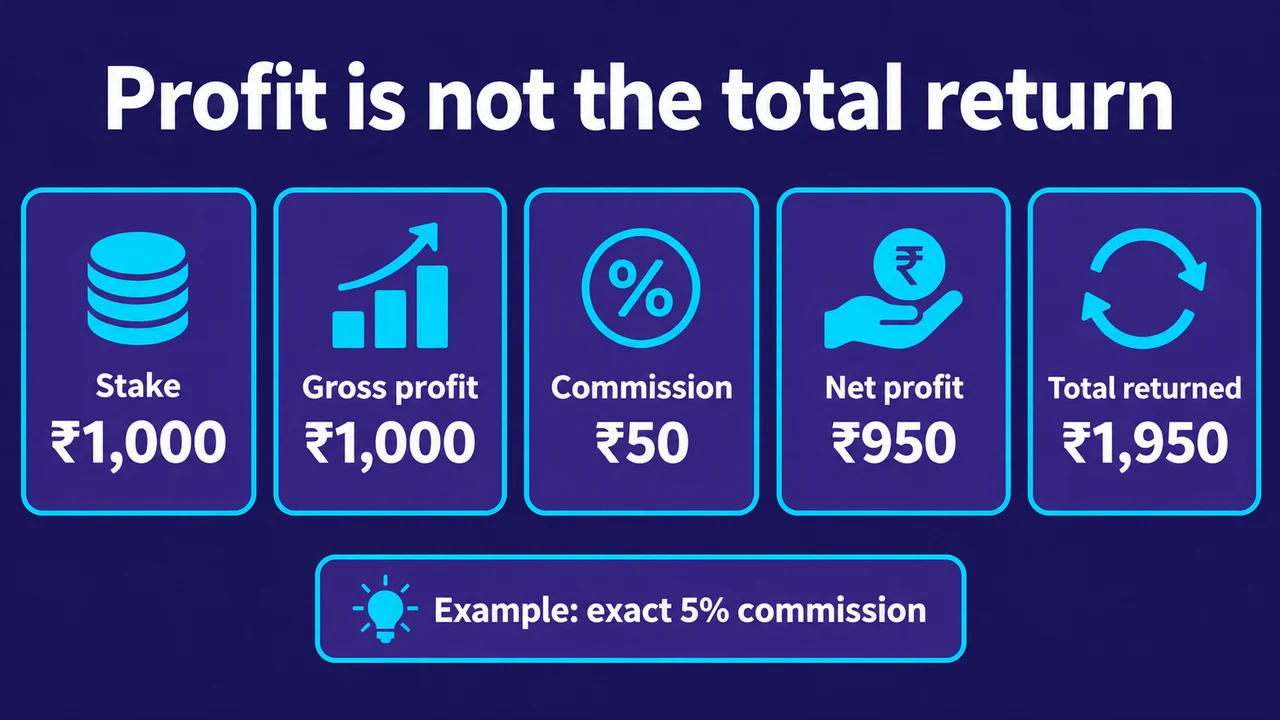
In a standard 5% commission example, commission is taken from the gross profit on a winning Banker wager. It is not 5% of the combined stake-and-profit return, and it is not a fee that automatically applies to every losing bet. A losing ₹1,000 main wager loses the stake; a qualifying tie push returns it without profit.
| Banker stake | Gross win profit | 5% commission | Net profit | Stake + net profit |
|---|---|---|---|---|
| ₹500 | ₹500 | ₹25 | ₹475 | ₹975 |
| ₹1,000 | ₹1,000 | ₹50 | ₹950 | ₹1,950 |
| ₹4,000 | ₹4,000 | ₹200 | ₹3,800 | ₹7,800 |
These are exact arithmetic examples. They assume a 0.95:1 settlement without a separate rounding adjustment. Some tables display commission separately or collect it differently. Read the published rule for rounding, timing and stake increments before reconciling a transaction; the layout of a win message alone does not establish the fee method.
Loto-Québec’s published baccarat rules give a documented 0.95:1 Banker example and main-bet pushes on ties. This is a reference format, not evidence that a Vegas11 table uses the same configuration.
“No commission” is not one universal rule
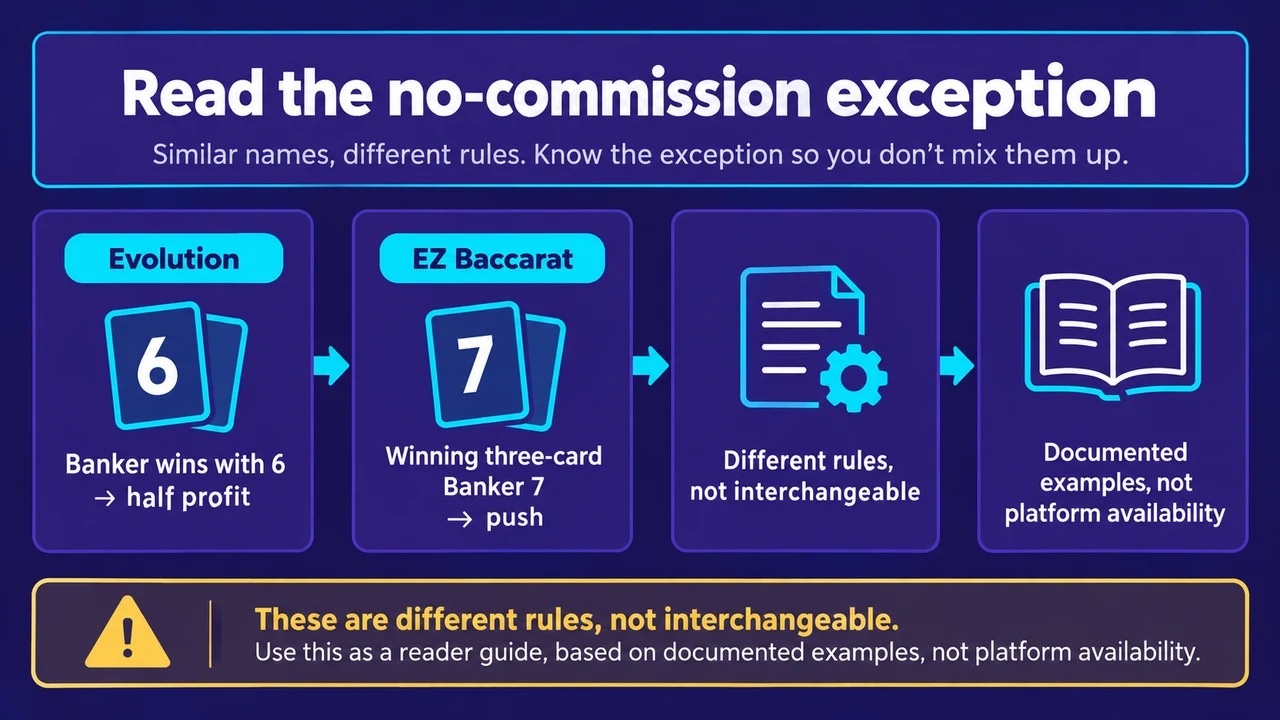
Removing the visible 5% charge does not tell you what a winning hand pays. A variant may reduce or cancel payment on a particular Banker result. Two official examples show why the complete table name matters.
| Documented format | Banker settlement | Rule to read closely |
|---|---|---|
| 5% commission baccarat | 0.95:1 on a winning Banker bet | Commission and any rounding |
| Evolution No Commission Baccarat | 1:1 except a Banker win with 6 pays 0.5:1 | Winning total of 6 |
| EZ Baccarat | A winning three-card Banker 7 pushes the Banker wager | Both total and number of cards |
Evolution’s No Commission Baccarat description identifies the half-payment on a winning Banker 6. On a ₹1,000 wager, that exception means ₹500 profit and ₹1,500 returned including the stake. It is not a 5% reduction.
EZ Baccarat’s own rule explanation describes a different exception: a winning Banker total of 7 made with three cards pushes the Banker bet. The ₹1,000 stake is returned with zero profit. A two-card 7 is not that same event. These examples explain documented variants; they do not establish which games are available through a particular operator.
A smaller fee is not a complete comparison
The financial comparison requires both the probability of each settlement event and its payment. Looking at 1:1 beside 0.95:1 misses the reduced-payment or push exception. A house-edge figure copied from another table may refer to a different number of decks or a different exception, so this article does not assign one number to every no-commission format.
Tie and side bets are separate wagers with their own payment tables. An 8:1 Tie payment and a 9:1 payment cannot share a house-edge figure merely because both are called Tie. Adding a side bet to offset a payout exception is also an additional risk, not a way to cancel the cost without consequences.
Commission matters especially when a staking system assumes the next win repairs earlier losses. The Martingale calculation shows a ₹16,000 winning Banker bet that still leaves a sequence down after 5% commission. Settlement rules should be checked before the sequence is considered, not after an unexpectedly small return.
How to check a return that looks wrong
If the question is whether to continue playing at all, return to the baccarat rules-and-limits overview. When loss recovery starts driving the next wager, review time-outs, deposit limits and self-exclusion rather than selecting a payment format to chase the balance.
- Record the exact table name, round reference and wager type.
- Separate the stake, profit, commission and total credited amount.
- Check whether a half-payment or push exception occurred.
- Check rounding and settlement timing in the current rules.
- If the figures still disagree, stop wagering and ask official support about that specific round.
The third-card rule guide can help you follow how a three-card result arises. Keep that dealing question separate from the payout question: knowing why a card was drawn does not determine what your wager earns.
Editorial update: October 2, 2026. Figures are original calculations using published example rules, with no firsthand table or payment testing claimed. Other jurisdictions and game versions can differ. This explanation does not assess legal access or recommend a betting system; adults should stay within a fixed affordable-loss boundary.
This update was prepared with AI assistance and reviewed separately for clarity and source limits. It does not include a firsthand test of the platform.
Check Vegas11 Details
Review the official sign-in page and current terms, and keep every session within your personal budget and time limits.